A Key with Worn Teeth
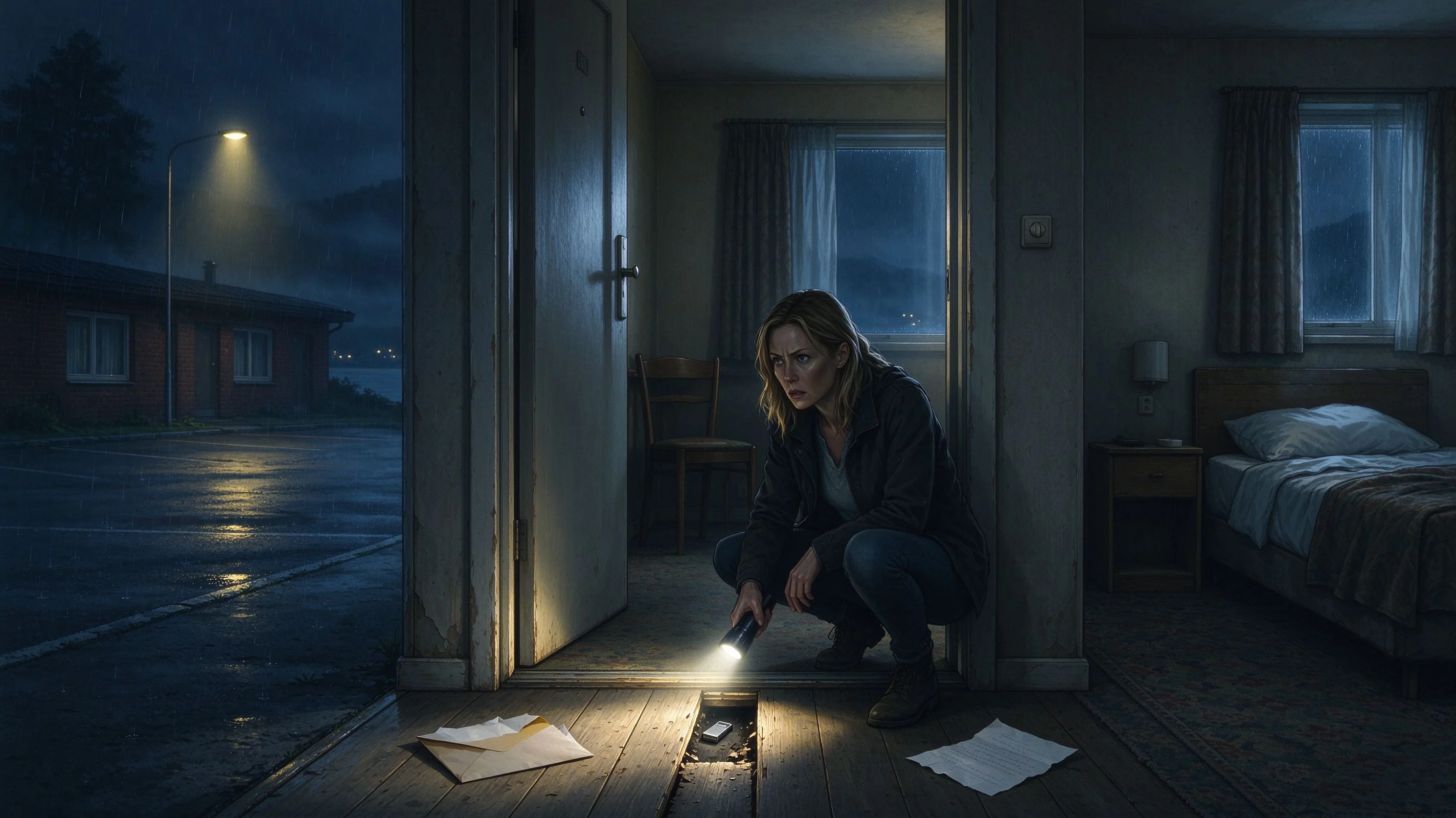
Fine rain rattled against the shopfront windows in the Old Town on Manchester’s east side, stretching the yellow flare of gas lamps into long ribbons of light across the glass. Martha Lind pushed open the side door of the florist’s—a shop that had been shut for six months—and the brass bell overhead gave a dull, muffled clack. No lights were on inside. A rush of cold air struck her face, thick with the smell of dry soil, rotting paper, and a faint, metallic tang of rust.
The edge of the counter was buffed to a dull shine from years of leaning elbows, catching the amber glow from the street outside. She navigated the space with practiced ease, her fingertips gliding over the dusty glass display cases. Three years ago, when she first left her things here, the old woman who ran the place was still alive, and the heavy scent of jasmine could choke out the mold creeping from the back room. Now, all that remained was the key in her coat pocket. Its teeth were worn flat, the grooves rubbed smooth by her thumb over the years.
The drawer was unlocked. Sitting inside was a brown paper parcel the size of a shoebox, weighed down by a half-empty pill bottle. Its label had been scratched off down to the glue, leaving only white tablets rattling softly inside amber glass. Beside it lay a single leather glove—a brown sheepskin, left-handed, with a faint scuff mark across the palm. The right one was gone.
Martha stared at the glove, her breathing caught in her throat. She hadn’t come for any of this. She just wanted to grab the parcel, lock the door behind her, and squeeze onto the Underground before the evening rush hour ground to a halt. She wanted to finish today just like she had finished the past thousand and ninety-five days—without letting anyone see a crack.
She reached into the drawer to pull out the paper parcel, but her knuckles brushed the edge of the glove first. The leather was cool, yet it felt oddly heavy. She froze, her hand hovering in the air. Outside, a sudden screech of brakes sliced through the dead silence of the shop like a blade.
Just as her fingertips caught the edge of the paper, a hand clamped down on her wrist like an iron cuff. Martha didn’t need to turn around. The smell of rain, cheap shampoo, stale tobacco, and sweat washed over her—a signature sharper and more distinct than a fingerprint.
“You’re not taking it,” Elias Ward said, his voice raspy. “Not now.”
He wore a faded trench coat with the collar turned up against the chill. His left hand was shoved deep into his pocket, while his right held her fast. The heat of his palm seeped through her sleeve, numbing her skin down to the bone. He had grown thin in the three years since she last saw him; his cheekbones were sharp as carved knives, his jaw dark with rough stubble.
“I’m only taking what’s mine.” Martha didn’t pull away. Her voice was flat, rhythmic, like someone reciting a postal code. “Daniel said no one would touch it before Friday.”
“Daniel’s word was never worth much.” Elias let go of her wrist. He reached into his inner pocket, pulled out a crumpled receipt, and slapped it onto the worn surface of the counter. Ward Insurance Investigations, Case No. MN-3347. “The property belongs to the bank now. Locks are being changed at eight tomorrow morning. What you want is at the bottom of the box. But you’re not taking the box.”
Martha stared down at the paper. The ink had bled into smeary gray-blue patches, stamped with yesterday’s date. Her thumbnail dug into the edge of the brown paper wrapper. At the bottom of the box—that meant spilling out the pill bottle, the glove, pulling everything into the light, and tearing open three years of buried memory right in front of him.
“Give me the key,” she said, extending her hand, palm up.
Elias didn’t move. Static hummed from the radio through the steady drumming of the rain, the sound fading in and out as Daniel Holloway rattled off the evening’s football scores. “You owe me an explanation,” he said. “Three years ago, you shoved a key into my hand, told me to keep it safe, and walked through the station doors. By the time you walked out, the case was closed and you were a ghost. Now you’re standing here like a stray picking up a package.”
Martha exhaled, her breath blooming white in the frigid air. She reached into her pocket, pulled out the key with its worn-down teeth, and dropped it into his open palm. Metal struck leather with a sharp click.
“The explanation is at the bottom of the box.” She stepped around him and grabbed the door handle. “I’ll take my things and leave. Don’t make me call the police.”
“The police?” Elias let out a dry laugh. He picked up the key and turned, his dress shoes tapping against the water-slicked floorboards. “Martha, there isn’t even a landline in here. You ripped the wire out yourself three years ago.”
The bell above the door gave a dull chime. She pushed her way out, the wall of rain swallowing her figure instantly.
Water trickled off the doorframe and slid down her collar. Martha stood on the threshold, her soles already soaked through, her hands empty. The brown paper package was still behind the counter—the bottle, the glove, and whatever lay beneath them. Elias had the key, and he was inside.
The radio kept droning on about the match, Daniel Holloway’s voice crackling out from the back room through bursts of static. “…Manchester up two-one, another corner chance in stoppage time…”
Martha took a half-step back out of the downpour, leaning against the damp, mold-streaked brick wall. She reached into her coat pocket. Only her phone was there—no signal. And no landline. Elias hadn't lied; she had pulled the cord out with her own hands three years ago.
She pulled out her cigarette pack, but the paper was too damp to pull a single stick free. Her lighter clicked twice, the small flame fluttering weak in the wind.
From inside came the sound of movement—a drawer sliding open, heavy objects shifting, glass clinking. He was digging down to the bottom of the box.
Martha snapped the lighter shut and pushed the door open again. The brass bell chimed softly.
Elias was crouching before the counter. The brown paper bag had been upturned against the polished edge of the wood; two white pills had rolled out of the bottle, resting beside the left-hand leather glove. Beneath where the box had been lay a plain manila envelope, its edges yellowed with age.
“An explanation,” Elias said without looking up, spinning the envelope halfway around with his index finger. “Three years ago, you walked into the station and vanished the moment you came out. Daniel told me you were sorting mail at the post office, said you were doing fine. Fine enough not to need a key, not to need an explanation, and not to need these.”
He lifted the amber pill bottle to the light, the tablets rattling softly inside. He flipped the envelope over, slid out a neatly folded sheet of copy paper, and slapped it onto the edge of the counter. The corner curled up, revealing a single line of blue ink written with so much pressure it had nearly torn through the page.
Martha reached for it, her fingertips touching the edge, but his hand clamped down over it.
“The box is in the bottom drawer, and the key is in my hand,” Elias said. “If you want it, read the letter first. Out loud, right in front of me.”
A sharp burst of feedback squealed from the radio, and Daniel Holloway raised his voice over the noise. “…A miracle finish! In the ninety-fourth minute of stoppage time—”
Martha unfolded the paper. The first line was not an acquittal reference number, only a single row of jagged handwriting: If you are reading this, it means I never got the chance to tell you in person—the night at the police station, the man who went in to replace me wasn’t a lawyer. He was a scapegoat. The ink cut off abruptly, leaving the rest of the page completely blank.
Elias opened his hand, letting the key drop onto the envelope. “The right to explain is back in your hands, Martha. Now it’s your turn to decide whether whatever is in that box is your life, or my debt.”
She flipped the paper over. On the blank backside, a line had been faintly carved into the fibers, not with a pen, but etched by a fingernail: Don’t trust him. Inside the box is a voice recorder. It has the lies you told for him in the interrogation room three years ago.
Her heart skipped a beat. She snapped her head up—Elias was staring at her, his face as blank as a freshly wiped slate, save for the single swallow in his throat.
“A voice recorder… you knew all along.”
“I knew it was in the box,” he corrected her, his lip twitching into something that was far from a smile. He pointed a index finger at her coat pocket. “I just didn’t know what was recorded on it. But if you carved that warning to yourself three years ago to ‘not trust me,’ then you back then understood better than you do now: the most dangerous thing in this room isn’t the insurance investigator come to collect a debt. It’s the mail sorter who kept your lie all this time—and managed to deceive even herself.”
Martha went rigid. The phone in her pocket felt heavy, its screen dark, yet seemingly radiating heat against her side.
Martha smoothed out the paper once more, the jagged words searing into her eyes: If you are reading this, it means I never got the chance to tell you in person—the night at the police station, the man who went in to replace me wasn’t a lawyer. He was a scapegoat. Nothing followed it. On the back, the faint fingernail etches remained: Don’t trust him. Inside the box is a voice recorder. It has the lies you told for him in the interrogation room three years ago.
“The right to explain is back in your hands.” Elias dropped the key onto the envelope again, its worn brass teeth catching the faint glare of the light. “Your turn to decide if what’s in that box is your life, or my debt.”
The radio fell dead silent, and then Daniel Holloway’s voice bled through the wall, raspy and stripped of his announcer’s cadence: “…Martha? Elias came to see me. The key was under the flowerpot, the box in the bottom drawer. He told me to tell you—don’t let yourself read that letter alone.”
Elias pulled a right-hand leather glove from his inside pocket—black sheepskin, its lining intact—and slapped it onto the bright edge of the counter next to the left glove. Two tiny flecks of white scrap clung to the fingertips of the left glove. “A pair. Three years ago outside the police station, you threw down the left glove and shoved the right one into my pocket. You said, ‘The chain of evidence is broken. Congratulations on the promotion.’ The chain was never broken. You’ve been holding it the whole time.”
“There was only you and me in that interrogation room.” He took half a step closer, his pupils unmoving in the dim yellow light. “There was no ‘him.’ You signed the confession. The handwriting was verified. Once you signed, you pressed the key into my palm and said, ‘The box is yours, the debt is settled.’ Then you got into Daniel’s car without so much as a glance in the rearview mirror.”
Martha’s head cracked against the doorframe, sending a dull clink through the brass bell. Her fingers closed around the key he shoved across the counter. The cold brass burned her skin. On the polished counter edge, two faces mirrored back in the dim light. She yanked open the bottom drawer. The box rested in the shadows, the tiny red light on the recorder pulsing faintly, as if waiting to spit out the name of the person who finally hit stop.
She lifted the entire box out. The glowing red light flickered beneath her fingertips like a miniature heart. Elias leaned forward, pressing both hands onto the gleaming wood. His right leather glove lay flat beside the left, a sliver of sheepskin lining turned outward. Trapped between the fingers were two tiny white crumbs—a matching pair. Three years ago, outside the precinct, she had tossed one on the ground and shoved the other into his pocket, telling him the chain of evidence was broken.
“The chain was never broken.” Elias didn’t look at her, his eyes fixed on the box. “There was only you and me in that room. You signed the deal. The handwriting was verified. You pressed the key into my hand, said the debt was settled, and got into Daniel’s car without ever looking back.”
The radio fell completely silent. Nothing remained except the steady drumming of rain against the glass and the fog creeping in through the gap under the door.
Martha’s thumb hovered over the stop button. Under her thumbnail were still bits of paper, scraped clean three years ago, bearing three scratched words: *Don’t trust him.* Back then, she thought "him" meant the investigator sitting across the table. She hadn’t realized it meant the woman sitting on this side—the sorter holding the pen, taking the fall for a man.
"I’m giving the narrative back to you." Elias slid the key closer, its worn brass teeth pressing freezing cold against her palm. "Destroy it, or keep it. It’s up to you."
The red light went dark. Silence exploded in the room. Martha didn’t smash the recorder, nor did she slip it into her pocket. She shoved the box straight back into the bottom drawer, sliding it all the way to the rear until her knuckles knocked against the backboard.
When she turned to leave, her coat stirred up a small cloud of ancient dust. At the far end of the counter, an unlabelled pill bottle lay beside a glass of water. The water was long cold, tiny motionless bubbles clinging to the inner wall.
She twisted off the cap, tipped two white tablets into her palm, tossed them back, and swallowed them dry. The brass bell chimed softly. The door swung shut. Outside, the rain kept falling.
Transparency Disclosure: Content here is for informational and entertainment guidance. This publication maintains editorial independence, though some links may generate affiliate revenue. For copyright inquiries or content removal, please reach out to our desk.